
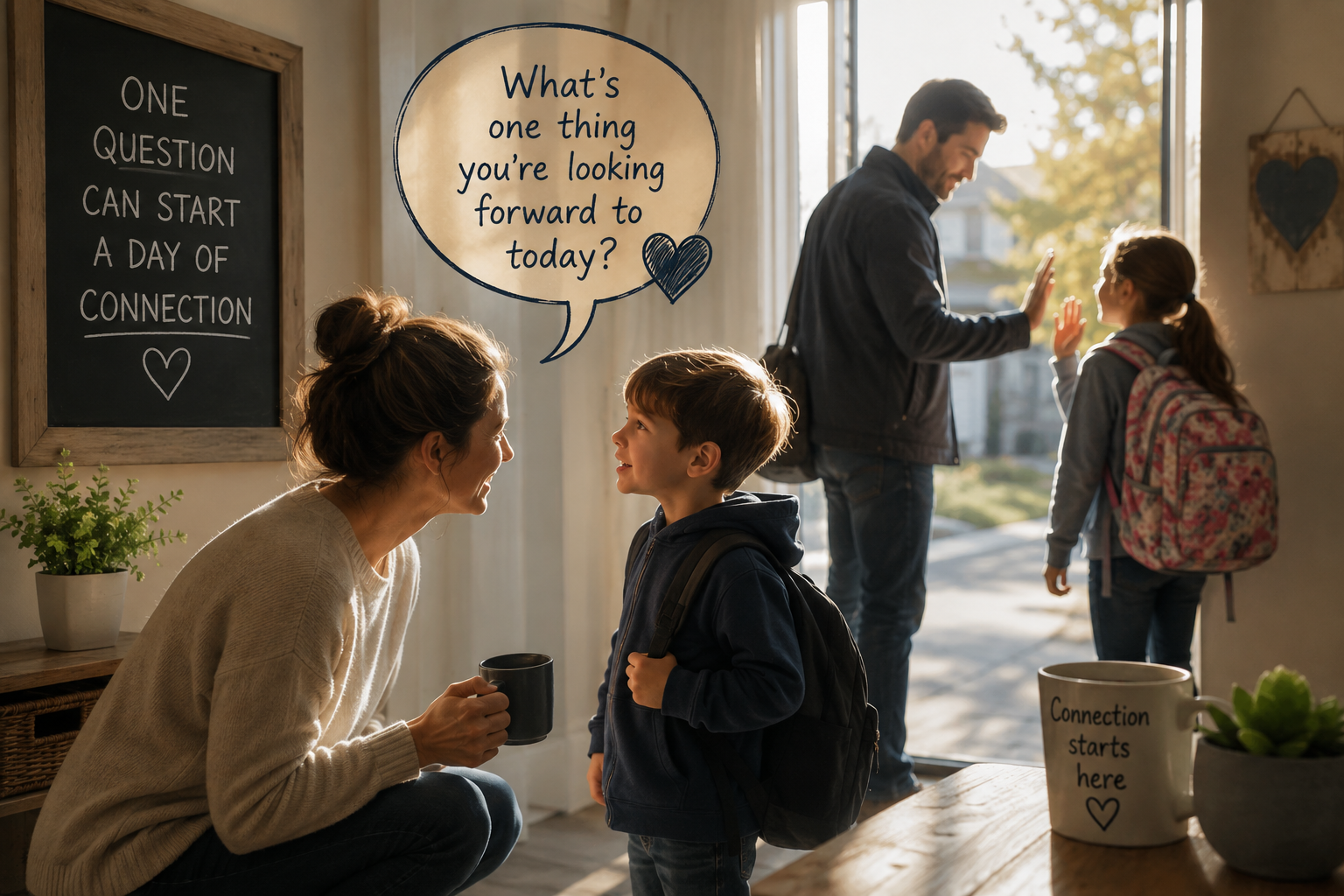
Before Everyone Runs Out the Door… One question. One connection.
Years ago, someone shared a simple family tradition with me that I’ve never forgotten.
Every morning, before everyone heads out the door, each person answers one question:
“What is one thing you’re looking forward to today?”
Everyone answers.
Not just the kids.
The adults too.
Maybe it’s something at school. Maybe it’s seeing a friend. Maybe it’s a meeting. Maybe it’s recess.
Then everyone heads out the door.
But the conversation doesn’t end there.
At dinner, they ask the follow-up:
“How did that thing you were looking forward to go?”
Maybe it went wonderfully. Maybe it didn’t happen. Maybe it was a complete disaster.
And that’s okay.
Everything is on the table.
I love this simple tradition because it isn’t really about the question.
It’s about what the question creates. It creates a reason to talk.
It tells children:
What happens in your day matters to me.
Years ago, someone shared a simple family tradition with me that I’ve never forgotten.
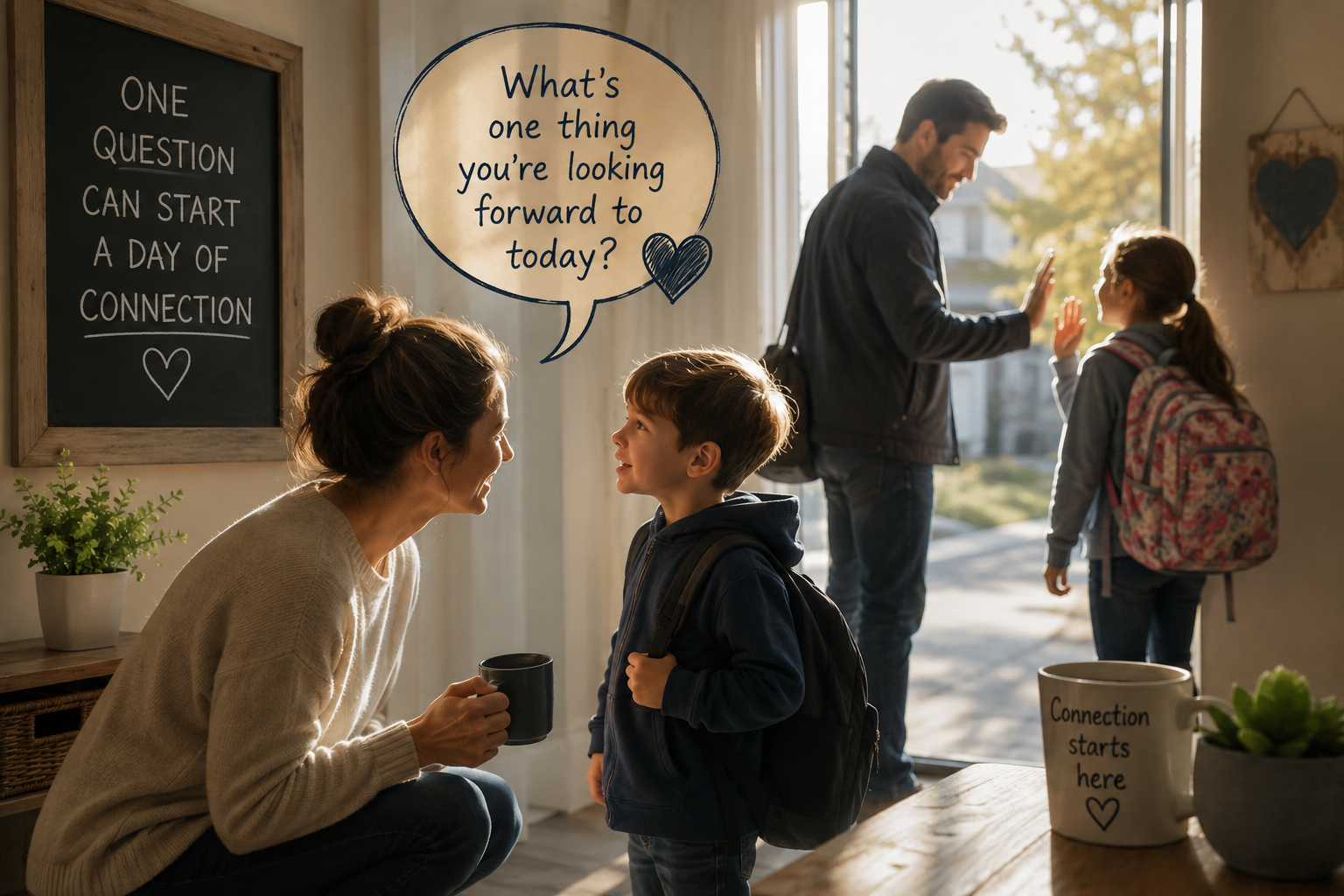
Every morning, before everyone heads out the door, each person answers one question:
“What is one thing you’re looking forward to today?”
Everyone answers.
Not just the kids.
The adults too.
Maybe it’s something at school. Maybe it’s seeing a friend. Maybe it’s a meeting. Maybe it’s recess.
Then everyone heads out the door.
But the conversation doesn’t end there.
At dinner, they ask the follow-up:
“How did that thing you were looking forward to go?”
Maybe it went wonderfully. Maybe it didn’t happen. Maybe it was a complete disaster.
And that’s okay.
Everything is on the table.
I love this simple tradition because it isn’t really about the question.
It’s about what the question creates. It creates a reason to talk.
It tells children:
What happens in your day matters to me.
Research on parent-child conversations about setbacks gives us a reason to think about this. In a study of 231 mother-child pairs, researchers found that when mothers acknowledged their children’s emotions and discussed ways to work collaboratively on future problems, this was associated with less fear of making mistakes in children. [1]
But there is another piece of this that I think is especially important.
Children are watching us.
If we expect children to be able to say:
“That didn’t go the way I hoped.”
“I made a mistake.”
“I’m disappointed.”
“I don’t know what to do next.”
Then perhaps they need to see that we can say those things too.
Not because children need to carry our adult problems. They don’t. But because they need to know that being human isn’t the same thing as being perfect.
Research on parental emotion socialization has found that the ways parents respond to, discuss, and express emotions are connected with children’s emotional and social development. [2]
Additional research by Haimovitz and Dweck found that parents’ views of failure were related to their children’s developing beliefs about learning and intelligence. In other words, children notice how we think and talk about failure. [3]
That matters.
Because I don’t want children to grow up believing that success means never getting it wrong.
Sometimes we get it right. Sometimes we get it wrong. Sometimes we don’t know. Sometimes we have to try again. And sometimes the thing we were looking forward to doesn’t turn out the way we imagined.
That’s life.
Our job isn’t to remove every disappointment. It’s to help children know that they can move through it.
And perhaps that’s what I love most about this family’s morning question. It starts before anything has gone wrong and creates connection when things are good.
And then, when the day doesn’t go according to plan, there is already a pathway back to the conversation.
“Tell me about it.”
No fixing. No judgment. No pretending. Just a family making room for the good, the hard, the unexpected, and everything in between.
So, as families head out the door for a new school year, perhaps try one simple question:
“What’s one thing you’re looking forward to today?” And then remember to ask about it later.
Because sometimes one small question can become a much bigger conversation.
A little research behind this idea
[1] Peterson, E. R., Sharma, T., Bird, A., Henderson, A. M. E., Ramgopal, V., Reese, E., & Morton, S. M. B. (2024). How mothers talk to their children about failure, mistakes and setbacks is related to their children’s fear of failure. British Journal of Educational Psychology, 95(1), 124–142. https://doi.org/10.1111/bjep.12685 (PubMed Central (PMC))
[2] Eisenberg, N., Cumberland, A., & Spinrad, T. L. (1998). Parental socialization of emotion. Psychological Inquiry, 9(4), 241–273. https://doi.org/10.1207/S15327965PLI0904_1 (PubMed)
[3] Haimovitz, K., & Dweck, C. S. (2016). Parents’ views of failure predict children’s fixed and growth intelligence mind-sets. Psychological Science, 27(6), 859–869. https://doi.org/10.1177/0956797616639727 (Association for Psychological Science)
This article was published on Substack. Subscribe to Lynn’s page for free.
Where Literacy and Well-Being Meet
I remember a Grade 3 student whose behaviour initially appeared to be the problem. She was avoiding work. She was finding ways not to participate. On the surface, some of her behaviours could easily have been interpreted as defiance, disengagement, or simply not wanting to do the work. But when we looked more closely, we discovered something important: She wasn't reading at grade level.
Think about that for a moment. If you were repeatedly asked to do something you didn't feel you were good at, wouldn't you find a way to avoid it? Most of us would. We don't naturally run toward the things that make us feel unsuccessful. We avoid them. We find distractions. We make excuses. We do what we can to protect ourselves from feeling like we can't do what everyone else seems to be able to do. For this student, assessment helped us understand what was underneath the behaviour. had several areas of literacy that needed to be addressed, including significant foundational difficulties with phonological awareness. Once we understood that, her behaviour looked very different. It wasn't simply a child who "wouldn't" do the work. It was a child who couldn't yet do the work successfully - and had found ways to avoid being put in that position. That distinction matters. It changed the question from: "How do we stop this behaviour?" to: "What is this child telling us, and what does she need next?"That is where literacy and well-being meet.
Looking at the Whole Child
Learning to read is complex. Children need strong foundational word-reading skills, but they also need oral language, vocabulary, knowledge, comprehension, and opportunities to use language in meaningful ways. And they need to believe they can learn. When a child experiences success, we often see more willingness to try. a child has the tools to be successful, frustration can decrease. And when a child begins to see themselves as a reader, that identity can become powerful. This is why our conversations about literacy need to extend beyond test scores and reading levels. The question isn't simply: "Can this child read?" We also need to ask: "What is this child experiencing as a learner?"
For more than 35 years, my work in education has taught me something I believe is easy to overlook: a child’s ability to learn and to feel confident, capable, and connected cannot be separated. Yet we often talk about literacy and well-being as though they are two different conversations. One happens in the literacy block. The other happens when we talk about relationships, belonging, mental health, or student well-being. But what happens when they are actually connected?
When behaviour is telling us something
I remember a Grade 3 student whose behaviour initially appeared to be the problem. She was avoiding work. She was finding ways not to participate. On the surface, some of her behaviours could easily have been interpreted as defiance, disengagement, or simply not wanting to do the work. But when we looked more closely, we discovered something important: She wasn't reading at grade level.
Think about that for a moment. If you were repeatedly asked to do something you didn't feel you were good at, wouldn't you find a way to avoid it? Most of us would. We don't naturally run toward the things that make us feel unsuccessful. We avoid them. We find distractions. We make excuses. We do what we can to protect ourselves from feeling like we can't do what everyone else seems to be able to do. For this student, assessment helped us understand what was underneath the behaviour. had several areas of literacy that needed to be addressed, including significant foundational difficulties with phonological awareness. Once we understood that, her behaviour looked very different. It wasn't simply a child who "wouldn't" do the work. It was a child who couldn't yet do the work successfully - and had found ways to avoid being put in that position. That distinction matters. It changed the question from: "How do we stop this behaviour?" to: "What is this child telling us, and what does she need next?"That is where literacy and well-being meet.
Looking at the Whole Child
Learning to read is complex. Children need strong foundational word-reading skills, but they also need oral language, vocabulary, knowledge, comprehension, and opportunities to use language in meaningful ways. And they need to believe they can learn. When a child experiences success, we often see more willingness to try. a child has the tools to be successful, frustration can decrease. And when a child begins to see themselves as a reader, that identity can become powerful. This is why our conversations about literacy need to extend beyond test scores and reading levels. The question isn't simply: "Can this child read?" We also need to ask: "What is this child experiencing as a learner?" The Ontario Human Rights Commission's Right to Read inquiry reinforces the importance of evidence-based reading instruction, early identification, timely intervention, and appropriate assessment and support. Read the Ontario Human Rights Commission's Right to Read Inquiry Report
This is the Conversation I Want to Explore
This new Substack is where I will bring these ideas together. **Not literacy or well-being. Literacy and well-being.**I'll be sharing practical ideas, research, resources, and conversations for educators, parents, and anyone who cares about helping children thrive. And I don't want it to be a one-way conversation.I want to hear what you're seeing in classrooms, schools, homes, and communities. What questions are you asking? What are you noticing? What has changed in your experience?
Continue the Conversation
I've written the full version of this article, including more about why literacy and well-being belong in the same conversation, on my new Substack.
If this is a conversation that matters to you, I invite you to subscribe for free. You'll receive new articles, practical ideas, research, and conversations as I continue exploring Where Literacy and Well-Being Meet.

From Struggling Reader to Confident Learner: The Power of Knowing What Comes Next
Imagine a Grade 3 student named Maya.
Maya is bright, curious, and actively participates in classroom discussions. She has great ideas and loves sharing her thinking. But when it is time to read independently, she becomes hesitant. She avoids unfamiliar words, guesses based on pictures or context, and begins to lose confidence.
Her teacher knows Maya is struggling.
But why?
Is Maya struggling because she does not understand the text?
Is she missing foundational decoding skills?
Does she need more support with fluency?
The answer matters because effective instruction begins with understanding the specific skill that needs to be strengthened.

Every teacher wants the same thing: to help every child become a confident reader.
And yet, if we spend time in real classrooms, we know the journey to get there does not look the same for every student.
Some children seem to pick up reading with relative ease. Others need more time, more explicit teaching, and more targeted support. Some need help hearing and working with sounds in words. Others need support with decoding, fluency, vocabulary, or comprehension.
That is not a failure. It is simply the reality of learning.
The real challenge is not recognizing that students learn differently. It is knowing what each child needs next.
Looking Beyond the Struggle
When a child struggles to read, the impact is rarely limited to academics. It can affect confidence, participation, and the way they begin to see themselves as learners.
I have seen how much this matters.
Many students do not lack ability, curiosity, or potential. They need instruction that meets them where they are and helps them move forward with confidence.
When we understand a student’s starting point and respond with the right support, we are doing more than improving reading skills. We are helping that child believe in their own potential.
Take a Grade 3 student named Maya.
Maya is bright, curious, and full of ideas. She contributes thoughtfully in class and loves to share her thinking. But when it is time to read independently, she hesitates. She avoids unfamiliar words, relies on pictures or context to guess, and slowly begins to lose confidence.
Her teacher can see that Maya is struggling.
But the more important question is why.
Does she need support with decoding?
Is comprehension the issue?
Would fluency practice make the difference?
Those questions matter, because effective instruction starts with understanding the specific skill that needs to grow.
Assessment That Leads Somewhere
This is where meaningful assessment becomes so important.
The Science of Reading has changed the way many of us think about literacy instruction. It is not a program or a passing trend. It is a large body of research that helps us understand how children learn to read and what kind of instruction supports them best.
One of its most important messages is simple: reading develops through explicit, systematic, intentional teaching.
But even the best teaching is more effective when it is guided by clear information.
Assessment helps educators identify strengths, uncover gaps, and monitor progress. But assessment alone is not enough. What matters most is what we do with that information.
If Maya’s teacher can see that her oral language and comprehension are strong, but that she needs support with decoding and word recognition, then the next steps become much clearer. Instead of offering more general reading practice, her teacher can provide focused instruction on the exact skills Maya needs.
That is what makes assessment powerful. It gives teachers a way to act with purpose.
Technology as a Support
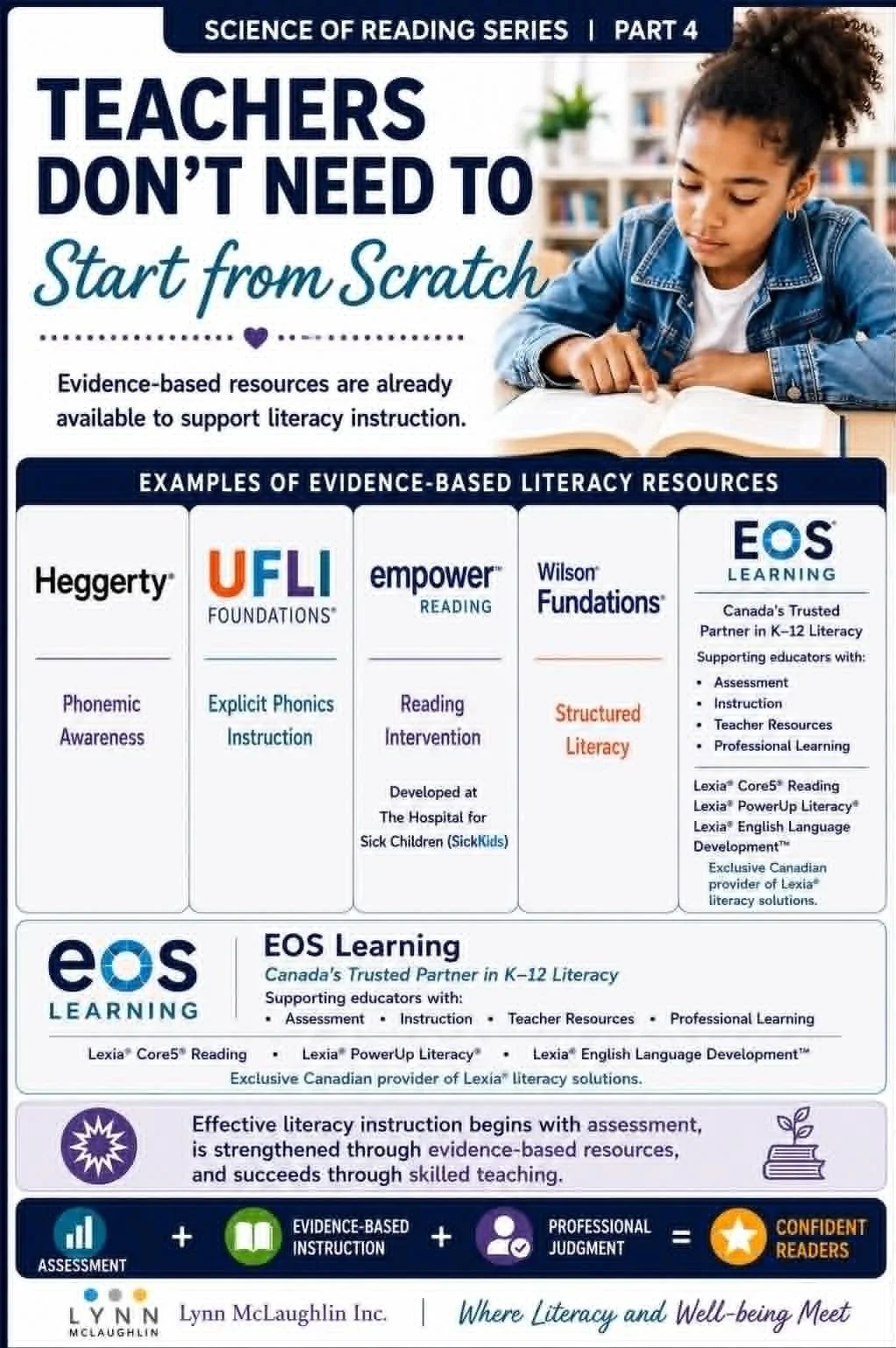
Evidence-based digital literacy tools can help make that possible.
As students move through personalized learning pathways, technology can gather useful information about their progress, highlight patterns, and help teachers see where each learner is growing and where support is still needed.
But technology does not replace the teacher.
It supports the teacher.
It gives educators more clarity so they can spend more time doing what matters most: teaching. While students work on appropriately challenging activities, teachers can use that information to provide small-group or one-on-one instruction that is responsive, targeted, and timely.
The strongest literacy classrooms do not rely on technology alone. They do not rely on assessment alone.
They bring together:
💥 evidence-based research,
💥 meaningful assessment,
💥 personalized learning,
💥 and exceptional teaching.
Technology can identify patterns. Teachers interpret them.
Technology can point to gaps. Teachers decide how to respond.
The teacher remains at the centre of literacy success.
Where Literacy and Well-Being Meet
At its heart, literacy instruction is about so much more than reading scores.
It is about helping children experience the confidence that comes from saying, “I can do this.” It is about opening doors to learning, connection, and opportunity.
When we identify needs and provide the right support, we do more than strengthen reading skills. We reduce frustration. We build confidence. We help students see themselves as capable, successful learners.
That is where literacy and well-being meet. This connection between literacy and well-being is also central to my work through The Power of Thought, a children's book series that gives children practical strategies for navigating thoughts, feelings and everyday challenges.
Over the past several weeks, I have been sharing a six-part series grounded in the Science of Reading. When teachers have clearer information about where students are starting, what they already know, and what they need next, they can make more confident instructional decisions and provide support that is more timely, targeted, and effective.
If you would like to continue the conversation, I invite you to explore the series on LinkedIn, Facebook or Instagram.
The Ontario Human Rights Commission’s Right to Read report reinforces a message that matters deeply to all of us: every child has the right to read, and it is up to all of us — educators, schools, systems, and communities — to help make that happen.

The Art of European Travel: Planning Smart, Laughing Often, and Letting Go of the Plan
Traveling through Europe can be magical, but it’s much easier when you know a few real‑life tricks before you go. In this post, I’m sharing the Europe travel tips I’ve learned from multiple trips: how to plan smart with flexible bookings, use eSIMs and money apps, avoid common car‑rental and currency pitfalls, and adapt to local rhythms like siestas and late‑night dinners. If you’re looking for practical, experience‑based advice to help you travel Europe with more confidence, ease, and enjoyment, you’re in the right place.
…..
Every trip through Europe teaches me something new, whether it’s a better way to plan, a hidden café or street music down a side street, or a reminder to simply slow down and enjoy where I am.
Since we check reviews before booking, it’s important to share our own experiences to help others. Since 2016, I’ve posted more than 140 reviews on TripAdvisor as LynnMcLau. If you are looking for an accommodation, restaurant or excursion - check it out.

Sunset on the grottos of Lagos, Portugal
Traveling to many countries in Europe has taught me that every trip is a mix of discovery, delight, and a few lessons learned the hard way. I have been in awe of the beauty of historical squares, unique nature, mountains, valleys, grottos, and centuries of history. Experiencing it in person has a lifelong effect.
I now regret waiting until I was over 50 years old to travel to there. If you’re dreaming about going, my advice is simple - don’t wait. Europe rewards curiosity and strong legs. With its steep inclines, endless staircases, and limited elevators, the sooner you go, the better. Take any opportunity you or you children have (exchanges etc). It opens our minds and lets us see things from very different perspectives.
After several visits across different countries (We’ve been to Spain and Portugal four times now), I’ve picked up tips that make each journey smoother and more enjoyable – from choosing flexible accommodations and managing money with ease to understanding cultural rhythms like siestas and late‑night dinners. Whether you’re planning your first adventure or returning for another round of exploring, I hope these insights help you travel smarter, adapt faster, and savor every moment.
1. Planning & Preparation
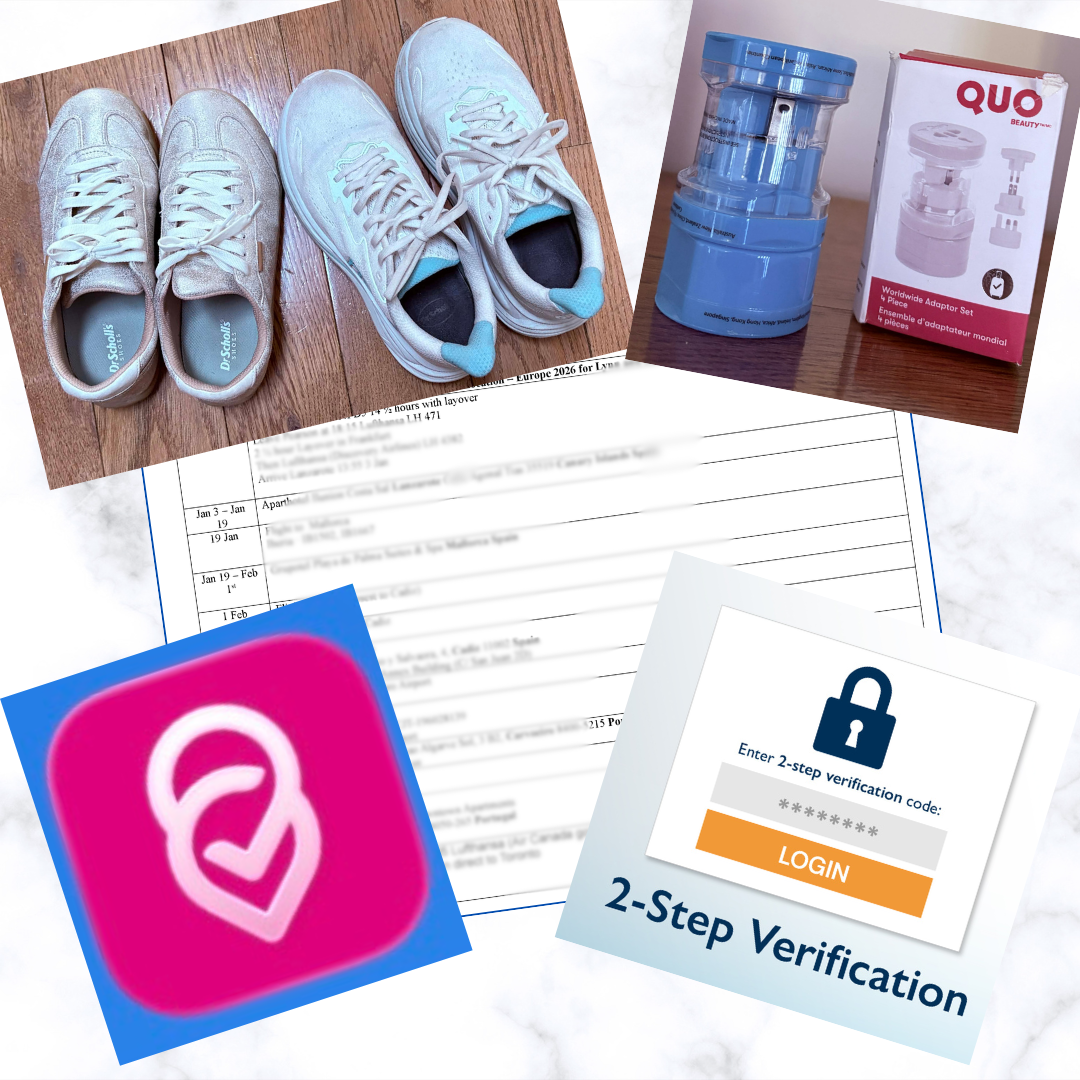
Save yourself money, stress and surprises.
A little planning upfront can save you money, stress, and surprises later on.
Use a VPN when you begin searching for flights and accommodations to avoid dynamic pricing. At minimum, open your browser “in cognito”.
Book accommodations with free cancellation whenever possible. Often you have up to about two weeks before arrival to cancel, which is invaluable when plans or world events change. Remember that in Europe, the ground floor is “0”. If you book a room on the 2nd floor, you will have 3 flights of stairs (many have no elevator).
Check your credit cards to see what travel insurance you already have. If you don’t have out‑of‑country coverage, shop around and purchase a plan before you go. Without it, one slip or fall will cost you thousands of dollars. Don’t take the chance.
Make sure your passports are valid well beyond your return date. Expect to be fingerprinted digitally with your photo taken at customs on arrival. Some countries require travel visas - be sure to research and apply ahead of time.
I keep a spreadsheet with every booking number, address, and key details. I bring a printed copy, keep one on my laptop, and email it to myself so it’s always accessible. There are many different apps you can use.
You’ll need power adapters, comfortable shoes, and layers of clothing for varying weather conditions.
2-Step Verification can be a nightmare! You won’t get text messages with verification codes when you are on an Sim Card. Be sure to set it up before you leave allowing email verification as on option. Visit your bank if you are unsure.
If you’re moving around during your vacation, plan your trains, buses, and flights in advance. The app Rome2Riois very helpful – it shows different ways to get from A to B across Europe, along with departure times and approximate costs. We once waited until the week before and found trains fully booked and were stuck with few options.
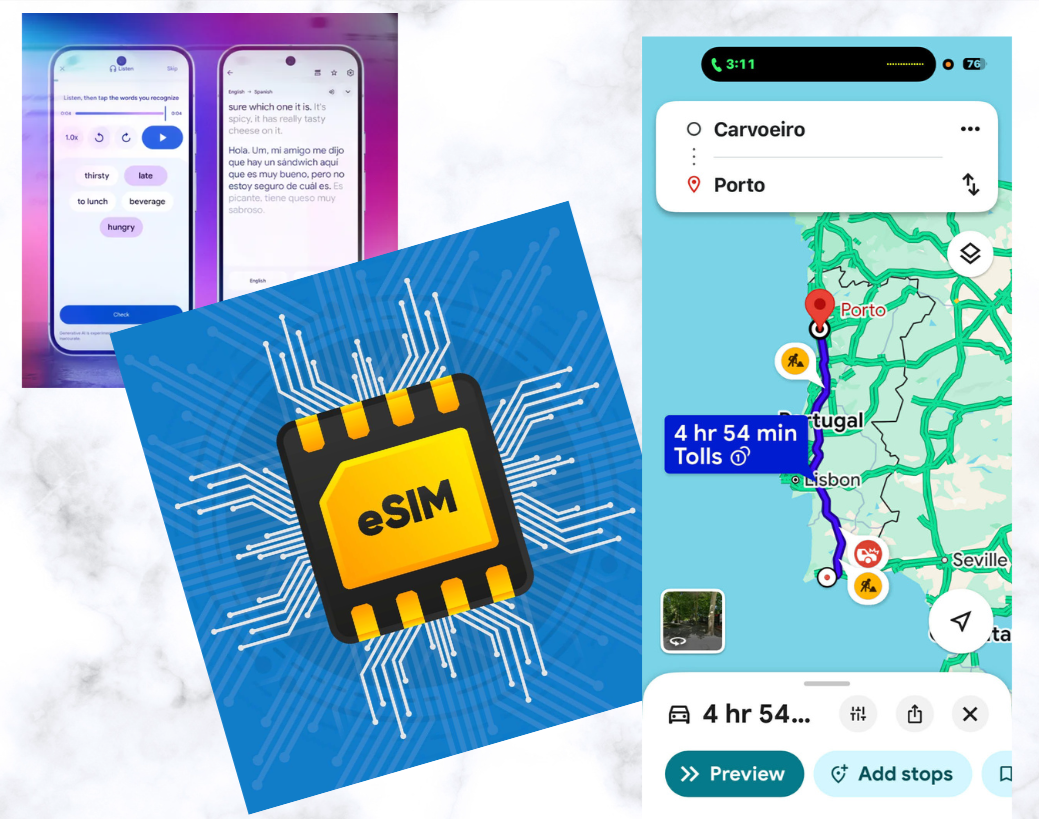
Crucial to your trip- data needed.
2. Staying Connected
Staying connected abroad doesn’t have to mean sky‑high phone bills.
Cell phone companies in Canada often charge a very high daily rate for data and calls. Consider eSIM apps that let you buy regional data plans, or a physical SIM if you prefer. My husband likes to buy a SIM card (before we leave) and install it as we land on arrival. He is assigned a local number and adds international calling as an option. You can also make an audio or video call anywhere for free now on WhatsApp or Messenger as examples.
Take advantage of language translation tools, but always make an effort to speak a few words in the local language. It’s respectful and genuinely appreciated.
Avoid using public Wi‑Fi for banking or booking excursions. Use your mobile data instead for anything sensitive.
Google Maps has been our go‑to for navigation. You can download offline maps and use it for walking, bus, and train routes.
Bring your Firestick or TV app. Some TVs have apps loaded right onto them (Netflix, Prime, ESPN, Disney etc) for you to log into your account. For those that don’t, your firestick will give you access.
3. Managing Money

Have a balance of cash, cards in your Apple or Google Wallet.
Money management can make or break how relaxed you feel on your trip.
At ATMs, always choose to be charged in euros rather than converting to Canadian dollars on the screen. Dynamic currency conversion can be costly. As an example, I would have paid about 330 CAD to take out 200 EUR at the actual exchange rate, but the “convert to Canadian” option pushed it closer to 385 CAD.
Install an app like Wise or Revolut and load money onto it before you depart. I add funds via e‑transfer, and my Wise card sits in my Apple Wallet, making it easy to tap for purchases. It’s a great way to use a “cash‑like” option instead of your main credit card.
Many places still prefer cash for tips, and sometimes for small purchases. Ten percent is usually more than enough for tipping in many European countries.
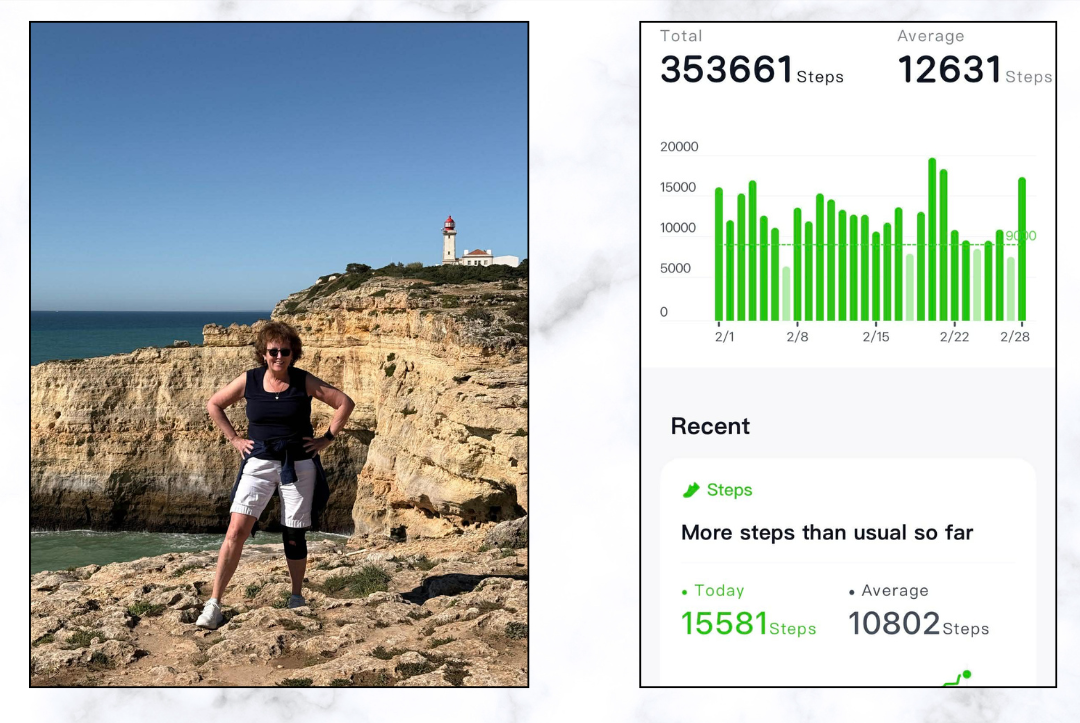
Hiking the grottos near Carvoeiro in the Algarve of Portugal.
What a great way to stay fit!
4. Getting Around
Getting from place to place is part of the adventure – and sometimes part of the learning curve.
Walking is often the very best way to explore. Some of our favorite discoveries have been purely by chance. Expect steep inclines, cobblestones, and lots of stairs.
In some regions, like the Algarve in Portugal, a rental car makes exploring much easier. You might also choose to rent a car for day trips anywhere in Europe. Book in advance and shop around. If you can avoid third‑party booking sites, do – they can muddy the waters. We once had a rental canceled without being informed, which is the last thing you want after a long day of travel.
If you decide to rent a car spontaneously, hotels/resorts often have an agreement with a local rental company. They’ll bring the car right to you to sign your agreement and get the keys.
Check whether you already have rental car insurance through your credit card so you don’t pay for duplicate coverage. Manual transmission is the norm; automatic cars are available but usually at a higher cost.
Some highways have toll booths or electronic toll systems. Car rental companies often offer a transponder rental that tracks your tolls so you can pay everything at once when you return the car.
If you plan to use local buses or transportation systems frequently, look into passes for the length of your stay. In many cases you can still pay cash when you board or tap a credit card.
For parking, apps like EasyPark (available in many European cities) can make paying for parking much easier. Install it before you travel so you’re ready when you arrive.
5. Daily Life & Local Rhythm
One of the joys of Europe is adjusting to a different rhythm of daily life.
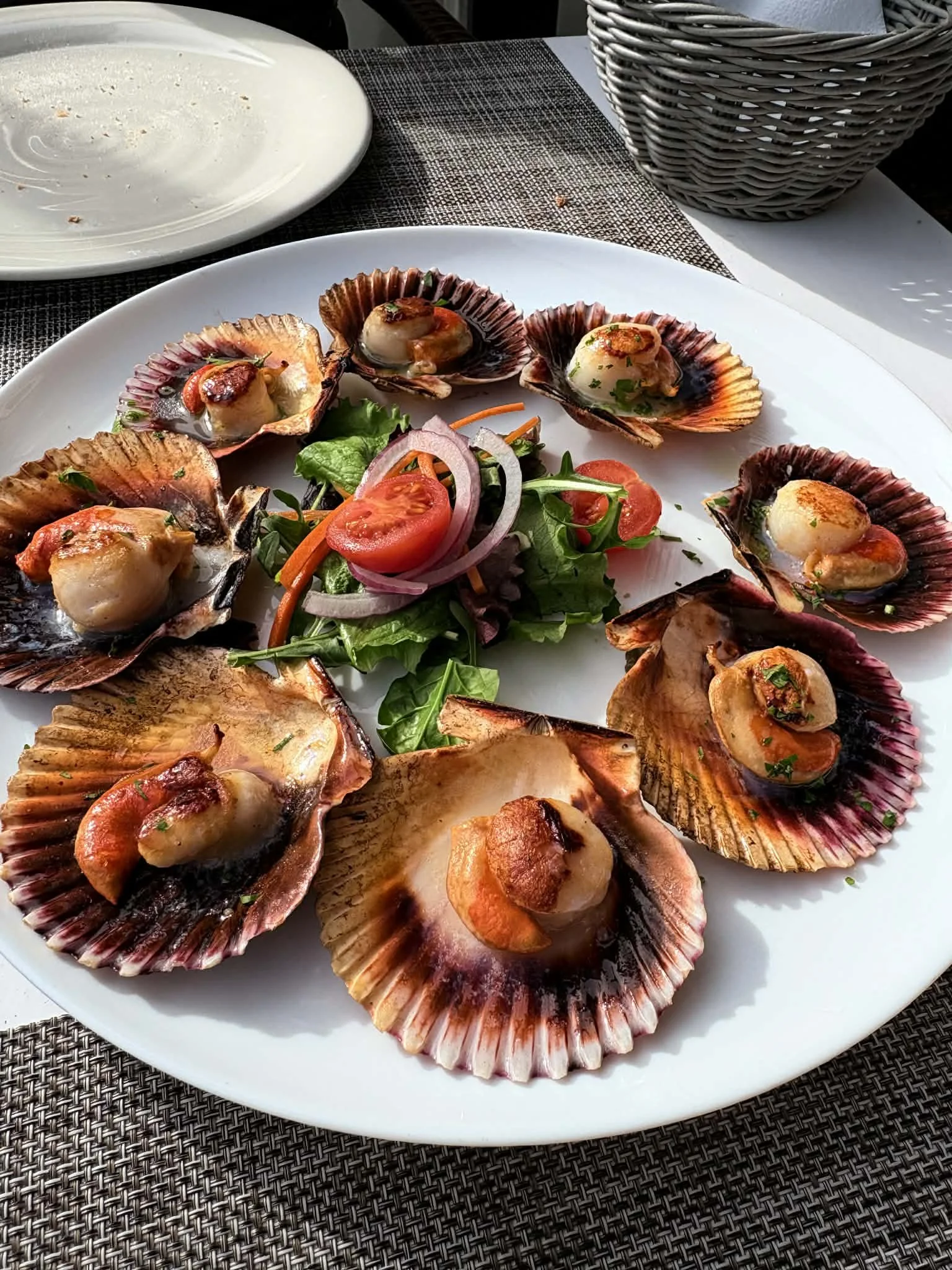
Presentation is everything!
Embrace siesta hours. In countries like Italy, Spain, and Portugal, many shops and businesses still close for a few hours in the afternoon, often starting around 2:00 or 3:00 p.m. It’s not always consistent, but it’s best to expect it.
Smoking is permitted on outdoor patios. If you are bothered by the smell of smoke like me, try to find a table up-wind. I’m told this may change in Spain soon.
Many restaurants close between roughly 4:00 p.m. and 7:00 or 8:00 p.m., especially in Spain. Check out the reviews so you are not disappointed.
In Spain, we’ve noticed that grocery stores and many businesses are closed on Sundays, so plan ahead for food and supplies.
In the off season, many businesses are closed, yet they do not update their hours on their websites. We arrived at many to find the lights off. Plan B in order!
Check official city or regional tourism websites for event calendars (festivals, markets, concerts, exhibitions).
If you are at a hotel or resort, as them what events are happening in the area. There may even be a concierge to speak with.
Join Facebook groups! They usually have advice on how to enjoy your stay. I joined one for Lanzarote and we found live entertainment schedules and advice on local busses through that site.
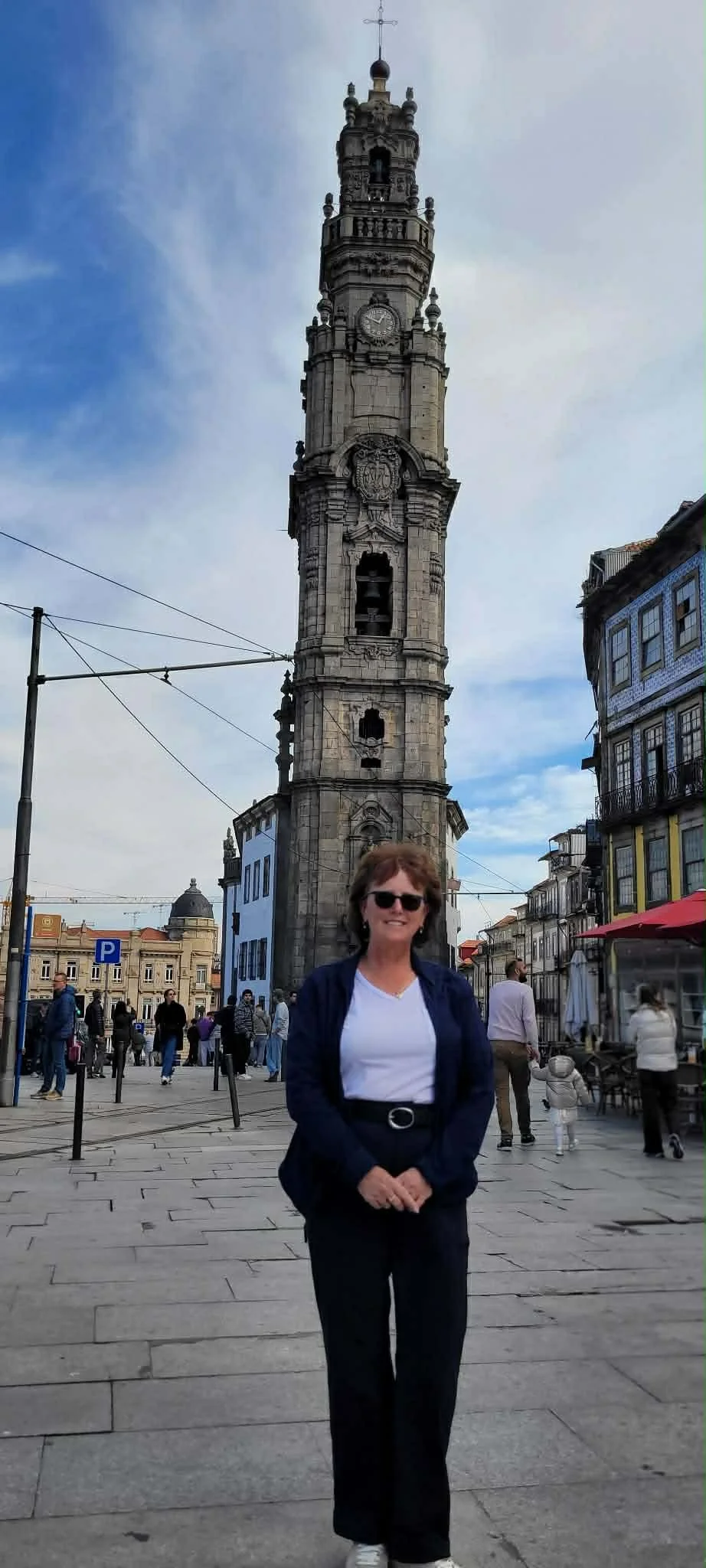
A historical walking tour brought us to the Clérigos Tower in Porto, Portugal.
6. Culture & History
Europe’s history is all around you – often literally beneath your feet.
We like to book an excursion right at the beginning of our trip. It helps you get your bearings and the tour guide almost always gives great advice on what else you should experience.
Appreciate Europe’s walkable history. Every city, and often every neighborhood, holds layers of stories if you take time to notice.
You’ll find famous tourist hotspots, but also smaller historical gems with fewer crowds that can be just as meaningful.
Respect local customs, especially in religious sites like churches, cathedrals, and mosques. Dress modestly when requested and follow posted guidelines.
Enjoy the regional cuisine and beverages! We sought out seafood restaurants wherever we were. You won’t find some of this at home!
7. Safety & Smart Travel
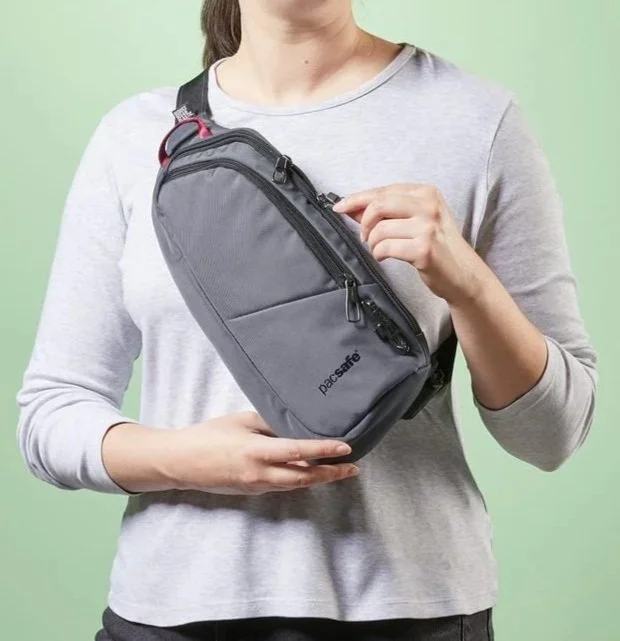
Anti-Theft Bags are a must!
Safety is about awareness, not anxiety.
Book tours and excursions through trusted providers. We often use platforms like Viator or GetYourGuide and always read the reviews carefully before committing.
Violent crime is generally low in many popular European destinations who have very strict gun laws, but pickpocketing can be common in busy tourist areas. My purse was stolen in Barcelona even though I knew better than to set it down beside me – a reminder that it only takes a second. It’s well worth the investment to purchase an anti-theft bag. I keep mine across my body with the bag in front of me - even when eating.
Keep digital copies of your passports, insurance details, and key documents stored securely (for example in your email or cloud storage), just in case you ever need them.
Closing Thoughts
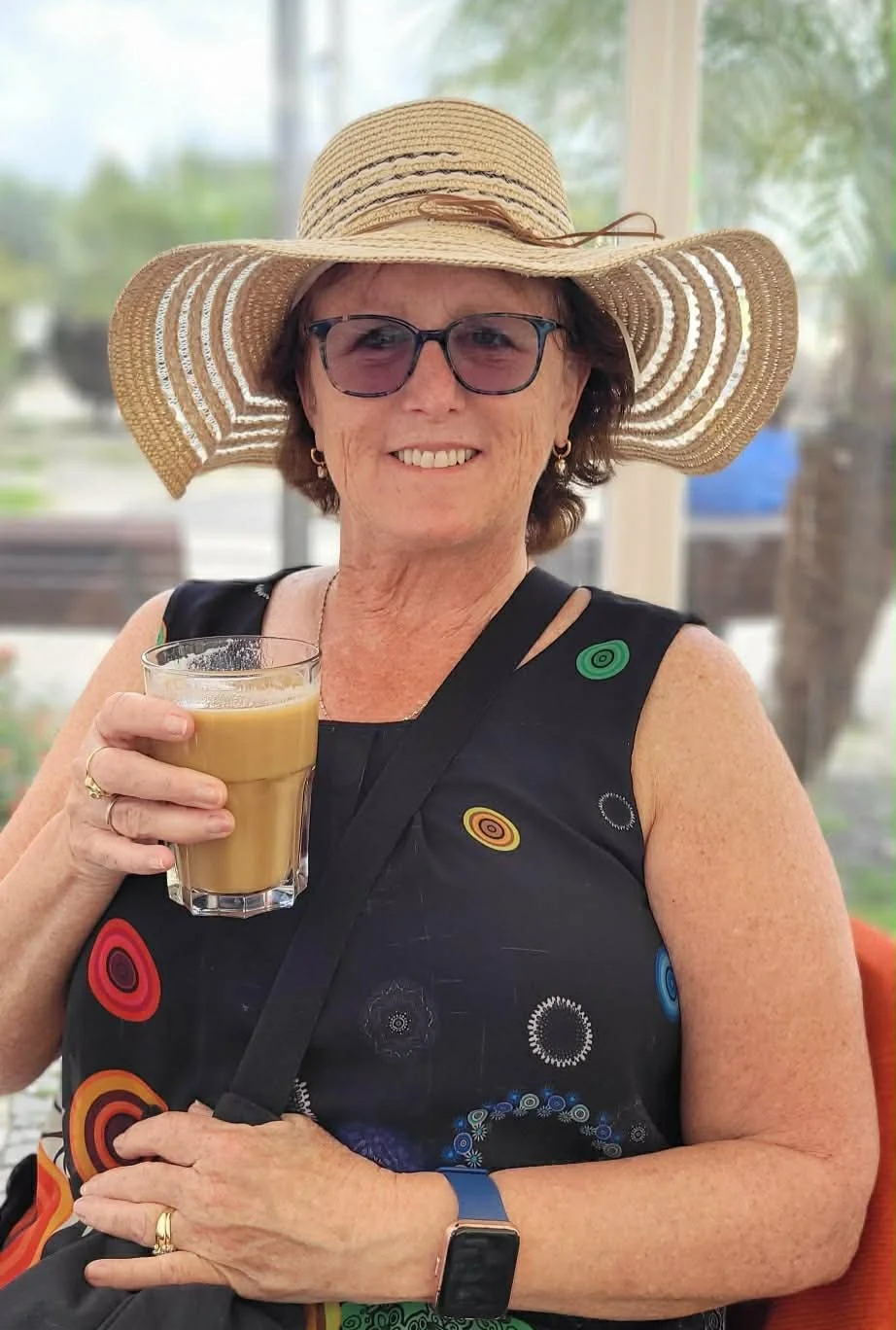
Enjoying an ice coffee in Lagos, Portugal
Every trip through Europe teaches me something new, whether it’s a better way to plan, a hidden café or street music down a side street, or a reminder to simply slow down and enjoy where I am.
Since we check reviews before booking, it’s important to share our own experiences to help others. Since 2016, I’ve posted more than 140 reviews on various travel sites including TripAdvisor as LynnMcLau. If you are looking for an accommodation, restaurant or excursion - check it out.
Have you traveled through Europe recently? I’d love to hear your favourite lesson, surprise, or “travel mistake” that turned into a great story. Share it in the comments or send me a message.

When We Know Better, We MUST Do Better
Australia is leading the way in banning social media for kids under 16. To gain access they are required to upload digital ID. My youngest son is a teacher there and I look forward to his insights.
𝐖𝐡𝐚𝐭 𝐚𝐫𝐞 𝐰𝐞 𝐰𝐚𝐢𝐭𝐢𝐧𝐠 𝐟𝐨𝐫 𝐂𝐚𝐧𝐚𝐝𝐚? There is more and more indisputable research linking social media to severe challenges for our children and youth. (I am currently doing a literature review.) Let me site some.
𝗦𝗹𝗲𝗲𝗽 𝗱𝗶𝘀𝗿𝘂𝗽𝘁𝗶𝗼𝗻 𝗮𝗻𝗱 𝟮𝟰/𝟳 𝗰𝗼𝗻𝗻𝗲𝗰𝘁𝗶𝘃𝗶𝘁𝘆 (late‑night scrolling, notifications) links heavy social media or screen time to depressive symptoms and suicidality.
𝗦𝗼𝗰𝗶𝗮𝗹 𝗰𝗼𝗺𝗽𝗮𝗿𝗶𝘀𝗼𝗻 𝗮𝗻𝗱 𝗹𝗼𝘄 𝘀𝗲𝗹𝗳‑𝗲𝘀𝘁𝗲𝗲𝗺. Constant exposure to idealized images and peer feedback loops (likes, comments, follower counts) is associated with body dissatisfaction, low self‑esteem, and depressive mood, especially in early and mid‑adolescent girls.
𝗖𝘆𝗯𝗲𝗿𝗯𝘂𝗹𝗹𝘆𝗶𝗻𝗴 𝗮𝗻𝗱 𝗼𝗻𝗹𝗶𝗻𝗲 𝗰𝗼𝗻𝗳𝗹𝗶𝗰𝘁. The shift from traditional bullying to cyberbullying means harassment can be continuous, public, and difficult to escape, and is strongly associated with nonsuicidal self‑injury, depression, suicidal ideation
Social Media and Children’s Mental Health

Australia is leading the way in banning social media for kids under 16. To gain access they are required to upload digital ID. My youngest son is a teacher there and I look forward to his insights.
𝐖𝐡𝐚𝐭 𝐚𝐫𝐞 𝐰𝐞 𝐰𝐚𝐢𝐭𝐢𝐧𝐠 𝐟𝐨𝐫 𝐂𝐚𝐧𝐚𝐝𝐚? There is more and more indisputable research linking social media to severe challenges for our children and youth. (I am currently doing a literature review.) Let me site some.
𝗦𝗹𝗲𝗲𝗽 𝗱𝗶𝘀𝗿𝘂𝗽𝘁𝗶𝗼𝗻 𝗮𝗻𝗱 𝟮𝟰/𝟳 𝗰𝗼𝗻𝗻𝗲𝗰𝘁𝗶𝘃𝗶𝘁𝘆 (late‑night scrolling, notifications) links heavy social media or screen time to depressive symptoms and suicidality.
𝗦𝗼𝗰𝗶𝗮𝗹 𝗰𝗼𝗺𝗽𝗮𝗿𝗶𝘀𝗼𝗻 𝗮𝗻𝗱 𝗹𝗼𝘄 𝘀𝗲𝗹𝗳‑𝗲𝘀𝘁𝗲𝗲𝗺. Constant exposure to idealized images and peer feedback loops (likes, comments, follower counts) is associated with body dissatisfaction, low self‑esteem, and depressive mood, especially in early and mid‑adolescent girls.
𝗖𝘆𝗯𝗲𝗿𝗯𝘂𝗹𝗹𝘆𝗶𝗻𝗴 𝗮𝗻𝗱 𝗼𝗻𝗹𝗶𝗻𝗲 𝗰𝗼𝗻𝗳𝗹𝗶𝗰𝘁. The shift from traditional bullying to cyberbullying means harassment can be continuous, public, and difficult to escape, and is strongly associated with nonsuicidal self‑injury, depression, suicidal ideation and suicide.
𝗧𝗵𝗲 𝘁𝗵𝗿𝗲𝗮𝘁𝘀 𝗽𝗼𝘀𝗲 𝗯𝘆:
𝗔𝗻𝗼𝗻𝘆𝗺𝗶𝘁𝘆 𝗮𝗻𝗱 𝗳𝗮𝗸𝗲 𝗶𝗱𝗲𝗻𝘁𝗶𝘁𝗶𝗲𝘀. The easy creation of anonymous or fake profiles lets adults pose as peers, celebrities, or recruiters, making grooming and trust‑building feel low‑risk and low‑effort for offenders.
𝗣𝗿𝗶𝘃𝗮𝘁𝗲 𝗺𝗲𝘀𝘀𝗮𝗴𝗶𝗻𝗴 𝗮𝗻𝗱 𝗱𝗶𝘀𝗮𝗽𝗽𝗲𝗮𝗿𝗶𝗻𝗴 𝗰𝗼𝗻𝘁𝗲𝗻𝘁. Direct messages, encrypted chats, and auto‑deleting photos give predators space to isolate children from watchful adults, escalate conversations, and move quickly to sexual content or requests for images.
𝗙𝗶𝗻𝗮𝗻𝗰𝗶𝗮𝗹 𝗮𝗻𝗱 𝘀𝗲𝘅𝘁𝗼𝗿𝘁𝗶𝗼𝗻 𝘀𝗰𝗮𝗺𝘀. Once a child shares a compromising image or personal information, offenders can demand money, more explicit content, or access to bank and gift‑card details, turning emotional harm into financial exploitation.
We need legislation to put the legal responsibility on the companies to reduce children’s exposure to harmful content.
We need a ban on social media, following Australia's lead. Kids should not have access. Period.
When we know better, we 𝗠𝗨𝗦𝗧 𝗗𝗢 𝗕𝗘𝗧𝗧𝗘𝗥!