
Reading Must Be Explicitly Taught — and How We Teach It Matters
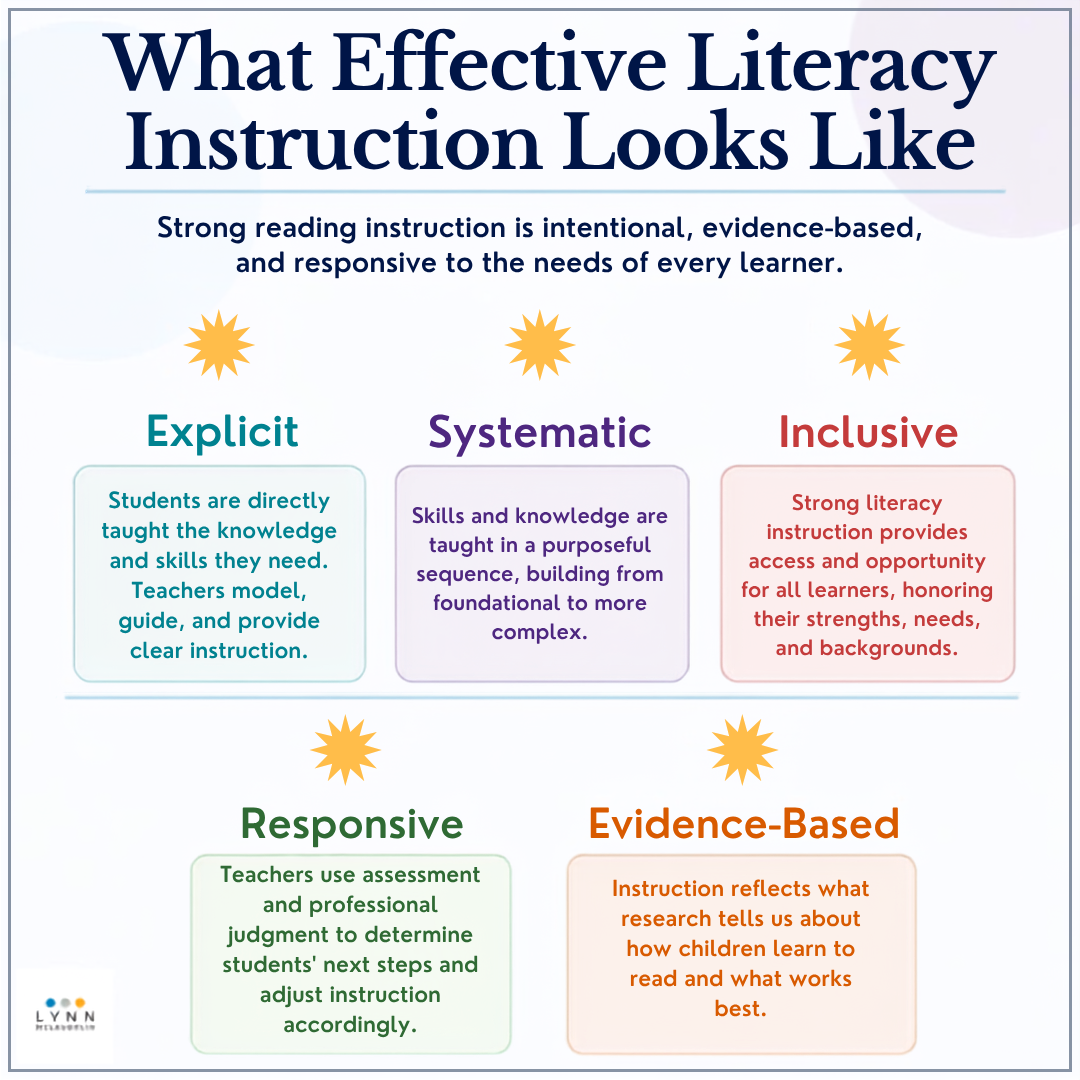
Every child deserves the opportunity to become a confident, capable reader. But learning to read does not happen simply because a child is exposed to books. Reading must be explicitly and systematically taught, using instructional practices grounded in evidence about how children learn to read.
From Research to Classroom Practice
With more than 35 years in education as a teacher, principal, Superintendent of Education, consultant and professional learning facilitator, Lynn McLaughlin brings both experience and evidence to literacy education.
Lynn helps educators and school leaders understand the Science of Reading and translate research into practical instructional decisions that support every learner.
Literacy Leadership and System Change
What does it take to strengthen literacy outcomes for students? It takes thoughtful leadership, evidence-based practices and a shared commitment to ensuring every student has the opportunity to learn.
At the EOS Learning Language & Literacy for Leaders Summit, I heard educational leaders share their perspectives on literacy and system change. This conversation captures some of the important thinking shaping this work. Enjoy this conversation on the podcast, “Education Matters”!
Reading Isn't a Single Skill — It's Many Skills Working Together
Phonological Awareness
Phonics
Fluency
Vocabulary
Comprehension
Effective reading instruction intentionally develops the skills that work together to enable students to become successful readers.
Professional Learning for Literacy
Through her work as a Professional Learning Facilitator with EOS Learning Canada, Lynn supports educators and school leaders in connecting evidence-based literacy practices with professional learning, data and technology.
Lexia® Core5®
PowerUp Literacy®
The goal isn't simply to identify where a student is struggling. It is to understand the evidence and determine what the student needs next.
Bring Literacy Learning to Your School or District
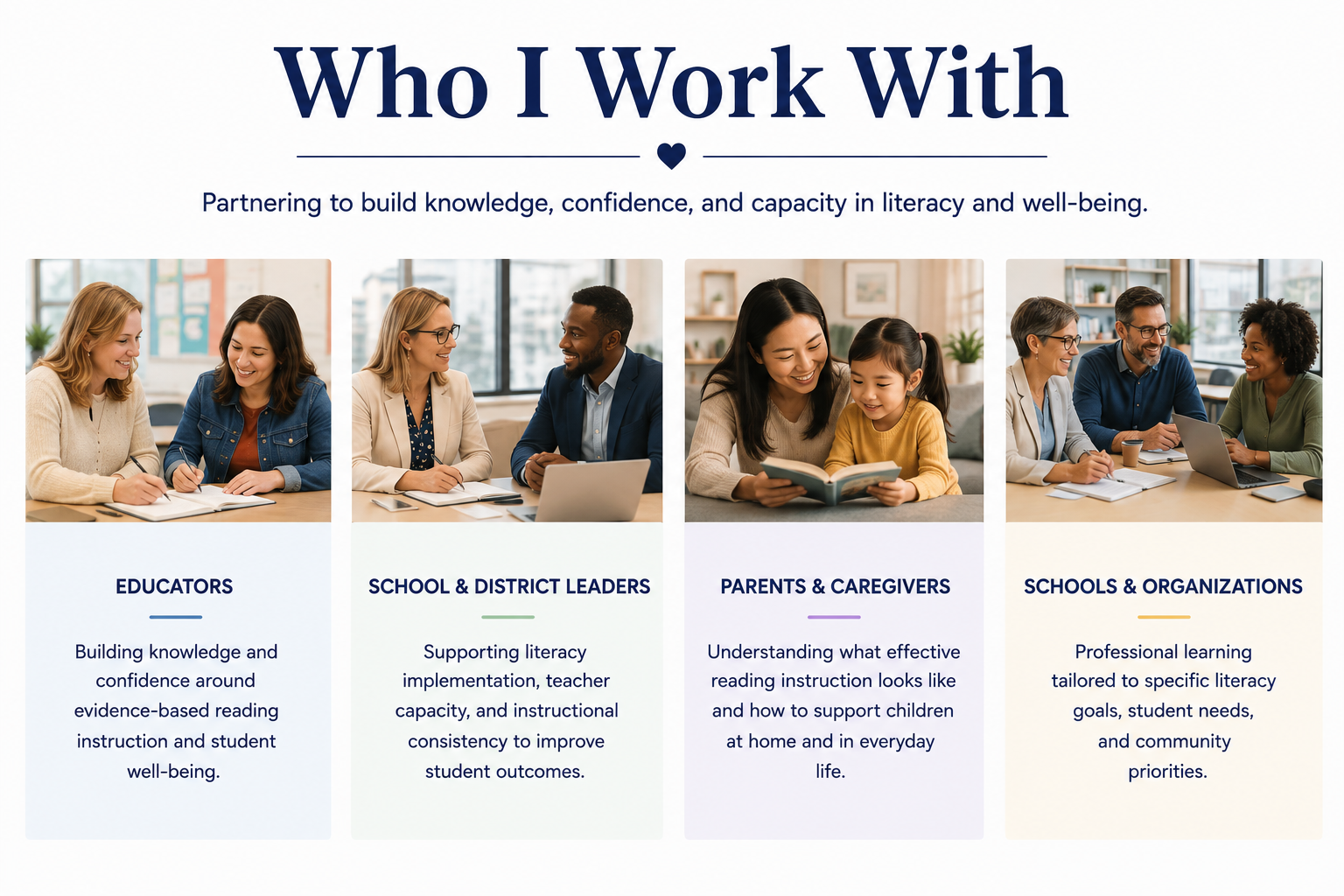
Looking for professional learning that connects the Science of Reading with practical classroom application? Let's talk about your school's or district's goals and the needs of your educators and students.
Where Literacy and Well-Being Meet
From Struggling Reader to Confident Learner: The Power of Knowing What Comes Next
This article explores how identifying what a struggling reader needs next can support both literacy growth and confidence as a learner.

Literacy and Well-being Are Connected
Learning to read is about more than academic achievement. When children have the instruction and support they need to become successful readers, they can experience greater confidence, engagement and independence as learners.