
From Struggling Reader to Confident Learner: The Power of Knowing What Comes Next

Every teacher wants the same thing: to help every child become a confident reader.
And yet, if we spend time in real classrooms, we know the journey to get there does not look the same for every student.
Some children seem to pick up reading with relative ease. Others need more time, more explicit teaching, and more targeted support. Some need help hearing and working with sounds in words. Others need support with decoding, fluency, vocabulary, or comprehension.
That is not a failure. It is simply the reality of learning.
The real challenge is not recognizing that students learn differently. It is knowing what each child needs next.
Looking Beyond the Struggle
When a child struggles to read, the impact is rarely limited to academics. It can affect confidence, participation, and the way they begin to see themselves as learners.
I have seen how much this matters.
Many students do not lack ability, curiosity, or potential. They need instruction that meets them where they are and helps them move forward with confidence.
When we understand a student’s starting point and respond with the right support, we are doing more than improving reading skills. We are helping that child believe in their own potential.
Take a Grade 3 student named Maya.
Maya is bright, curious, and full of ideas. She contributes thoughtfully in class and loves to share her thinking. But when it is time to read independently, she hesitates. She avoids unfamiliar words, relies on pictures or context to guess, and slowly begins to lose confidence.
Her teacher can see that Maya is struggling.
But the more important question is why.
Does she need support with decoding?
Is comprehension the issue?
Would fluency practice make the difference?
Those questions matter, because effective instruction starts with understanding the specific skill that needs to grow.
Assessment That Leads Somewhere
This is where meaningful assessment becomes so important.
The Science of Reading has changed the way many of us think about literacy instruction. It is not a program or a passing trend. It is a large body of research that helps us understand how children learn to read and what kind of instruction supports them best.
One of its most important messages is simple: reading develops through explicit, systematic, intentional teaching.
But even the best teaching is more effective when it is guided by clear information.
Assessment helps educators identify strengths, uncover gaps, and monitor progress. But assessment alone is not enough. What matters most is what we do with that information.
If Maya’s teacher can see that her oral language and comprehension are strong, but that she needs support with decoding and word recognition, then the next steps become much clearer. Instead of offering more general reading practice, her teacher can provide focused instruction on the exact skills Maya needs.
That is what makes assessment powerful. It gives teachers a way to act with purpose.
Technology as a Support
Evidence-based digital literacy tools can help make that possible.
As students move through personalized learning pathways, technology can gather useful information about their progress, highlight patterns, and help teachers see where each learner is growing and where support is still needed.
But technology does not replace the teacher.
It supports the teacher.
It gives educators more clarity so they can spend more time doing what matters most: teaching. While students work on appropriately challenging activities, teachers can use that information to provide small-group or one-on-one instruction that is responsive, targeted, and timely.
The strongest literacy classrooms do not rely on technology alone. They do not rely on assessment alone.
They bring together:
💥 evidence-based research,
💥 meaningful assessment,
💥 personalized learning,
💥 and exceptional teaching.
Technology can identify patterns. Teachers interpret them.
Technology can point to gaps. Teachers decide how to respond.
The teacher remains at the centre of literacy success.
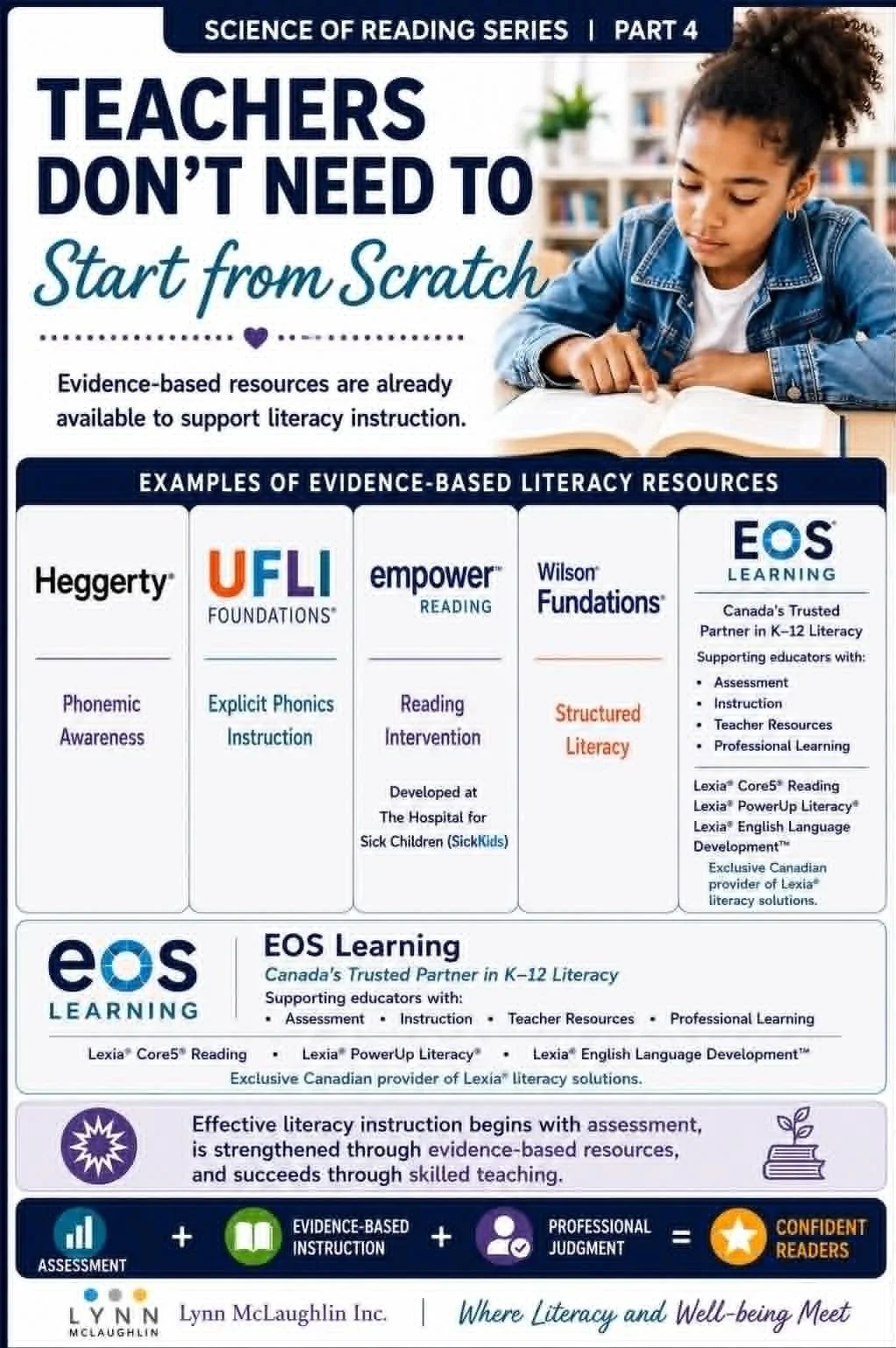
Where Literacy and Well-Being Meet
At its heart, literacy instruction is about so much more than reading scores.
It is about helping children experience the confidence that comes from saying, “I can do this.” It is about opening doors to learning, connection, and opportunity.
When we identify needs and provide the right support, we do more than strengthen reading skills. We reduce frustration. We build confidence. We help students see themselves as capable, successful learners.
That is where literacy and well-being meet. This connection between literacy and well-being is also central to my work through The Power of Thought, a children's book series that gives children practical strategies for navigating thoughts, feelings and everyday challenges.
Over the past several weeks, I have been sharing a six-part series grounded in the Science of Reading. When teachers have clearer information about where students are starting, what they already know, and what they need next, they can make more confident instructional decisions and provide support that is more timely, targeted, and effective.
If you would like to continue the conversation, I invite you to explore the series on LinkedIn, Facebook or Instagram.
The Ontario Human Rights Commission’s Right to Read report reinforces a message that matters deeply to all of us: every child has the right to read, and it is up to all of us — educators, schools, systems, and communities — to help make that happen.
